


Hui Zhou Shun Xin Industrial Co., Ltd. :Your Trustworthy Bamboo Surfboard Longboard Manufacturer!
Hui Zhou Shun Xin Industrial Co., Ltd. Was founded in 2018. has been committed to the production of various surfboards, It is a leading manufacturer and trader in China, Has rich manufacturing experience, and can meet all the requirements of customers.
Rich Product Variety
Our company can produce soft surfboards, hot press boards, racing boards, carbon fiber racing boards, EPS foam epoxy thin surfboards, epoxy resin soft surfboards, wave SUP boards, etc.
Wide Sales Area
Our products are exported to all over the world, and the market countries with frequent transactions include the United States, Australia, Europe, the United Kingdom, Japan, South Korea, Canada, Panama, Spain, France, Belgium and other countries.
Leading Service
We have many years of industry experience and a complete production management, quality supervision, sales service operation system. Whether you want to buy a kite board or a windsurfing board, just send your requirements by email and we can customize the product for you.
Many Production Equipment
We have advanced AKU molding machines, surfboard ovens, soft board hot stamping machines, marine bamboo inlay cutting machines, spray gun grinding machines and other equipment.

EPS Foam Epoxy Surfboards For Surfing
EPS foam epoxy surfboards are constructed with Expanded Polystyrene (EPS) foam as the core material. EPS is a type of lightweight, closed-cell foam that provides excellent buoyancy and is known for its strength-to-weight ratio. The core is typically encased in a layer of fiberglass cloth and epoxy resin, which adds structural integrity and durability while maintaining the board's overall lightweight characteristic.
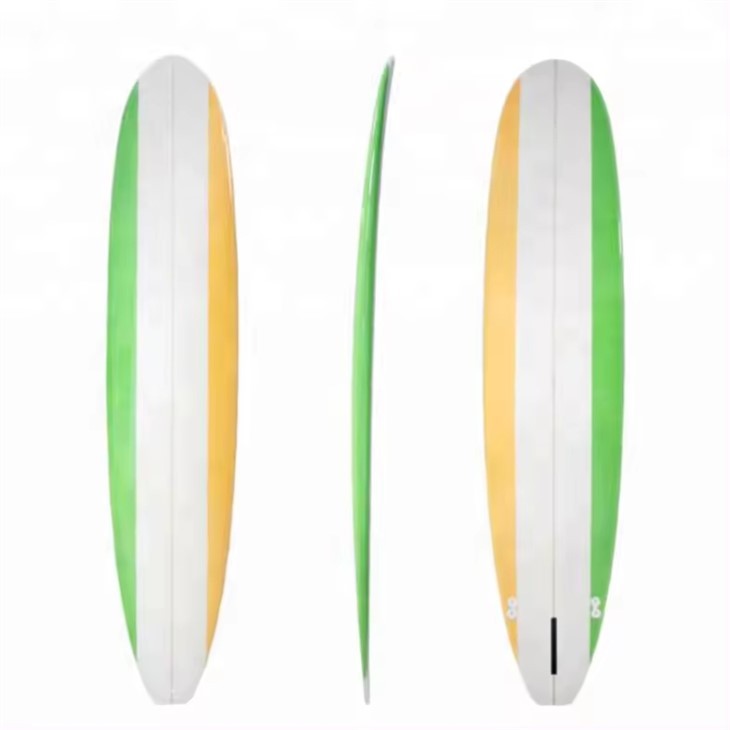
Epoxy Fiberglass Longboard Surfboard
An Epoxy Fiberglass Longboard Surfboard is a type of surfboard designed with an EPS (Expanded Polystyrene) foam core, coated with layers of fiberglass cloth, and then sealed with epoxy resin. The EPS foam core provides buoyancy and floatation, making it easier for surfers to paddle and catch waves. The fiberglass layers add rigidity and strength, while the epoxy resin offers a hard, waterproof finish that is resistant to damage from UV rays and saltwater.

EPS Foam Fiberglass Bamboo Surfboard
An EPS Foam Fiberglass Bamboo Surfboard combines several materials and construction techniques to create a high-performance and eco-friendly surfboard. The core of the surfboard is made from Expanded Polystyrene (EPS) foam, which is a lightweight, closed-cell foam that provides buoyancy and structural support. The outer layers of the surfboard consist of a woven fiberglass fabric, which is applied over the EPS foam core. The fiberglass adds additional strength and durability to the surfboard, allowing it to withstand the impact and stress of riding waves.

Full Wooden Surfboards Longboards
Full wooden surfboards longboards are crafted entirely from wood, often using a variety of timbers for different parts of the board. These surfboards are known for their classic aesthetic, environmental sustainability, and unique riding characteristics.

A stylish and sustainable addition to your watersports arsenal. Crafted from durable bamboo, this longboard offers a smooth and responsive ride, perfect for cruising flat waters or catching the perfect wave. The 8-foot length provides stability and control, making it suitable for both beginners and experienced surfers. Enjoy the unique look and feel of bamboo while surfing with confidence and style.

Wooden LongBoard Surfboards Fiberglass Surfboard
Surfing, a water sport full of passion and vitality, attracts countless warriors who love challenges and nature. In order to meet the needs of the majority of surfing enthusiasts, we have specially launched new wooden longboards and fiberglass surfboards to make your surfing trip more exciting and enjoyable.

A bamboo surfboard longboard is a type of surfboard where bamboo is used extensively in its construction. Bamboo is chosen for its strength-to-weight ratio, flexibility, and environmental benefits. The core of the board is often made from EPS (Expanded Polystyrene) foam, similar to many modern surfboards, but the outer layers are replaced with strips of bamboo veneer.
Features of Bamboo Surfboard Longboard
Stable
One of the most significant benefits of a Bamboo Surfboard Longboard is its stability. Longboards are wider and thicker than other types of surfboards, which makes them more stable in the water. This stability makes them an excellent choice for beginners and surfers who want to improve their balance.
Speed
Bamboo Surfboard Longboard is also known for their speed. The extra length of the board allows surfers to catch waves earlier, giving them more time to gain speed and ride the wave. This speed makes longboards an excellent choice for surfers who want to ride bigger waves.
More Floatable
Bamboo Surfboard Longboard is more floatable than other types of surfboards. This floatability makes it easier for surfers to paddle out to the waves and catch them. It also makes it easier to stay on the wave once you've caught it, as the board will stay on top of the water instead of sinking.
Surfing On Small Waves Easier
Bamboo Surfboard Longboard is also great for surfing on small waves. The extra length and width of the board make it easier to catch smaller waves that other surfboards might not be able to catch. This makes longboards an excellent choice for surfers who want to surf in a variety of conditions.
Adaptability
Finally, Bamboo Surfboard Longboard is incredibly adaptable. They can be used for a variety of surfing styles, from cruising to nose riding. This adaptability makes them an excellent choice for surfers who want to try different styles of surfing without having to buy multiple surfboards.
Parts of Bamboo Surfboard Longboard


Nose and Tail Shapes
The overall shape of a surfboard greatly affects its performance. The nose, located at the front of the board, and the tail, positioned at the back, come in different configurations, each serving a distinct purpose. A pointed nose is often seen on boards designed for larger waves. This shape helps the board cut through the water and aids in stability when faced with powerful waves. On the other hand, rounded noses are more common on boards used for smaller waves, as they allow for quicker turns and easier manoeuvrability. The overall shape of a surfboard greatly affects its performance. The nose, located at the front of the board, and the tail, positioned at the back, come in different configurations, each serving a distinct purpose. A pointed nose is often seen on boards designed for larger waves. This shape helps the board cut through the water and aids in stability when faced with powerful waves. On the other hand, rounded noses are more common on boards used for smaller waves, as they allow for quicker turns and easier manoeuvrability.
Rails
Rails, often referred to as the sides of the surfboard, wield a significant influence on the board's performance and interaction with the water's surface. Carrying distinct shapes and thicknesses, they are integral components that surfers carefully consider when choosing their boards. These unassuming elements play a pivotal role in the ride, translating the surfer's intentions into the dance with the waves. The variations in rail design lead to a range of effects, ensuring that surfboards are not only versatile but also tailored to specific surf conditions and skill levels.
Deck and Bottom Contours
The deck of a surfboard refers to the top surface that the surfer stands on. A flat deck offers stability, making it easier to maintain balance and paddle efficiently. This is particularly useful for beginners and those riding smaller waves. On the other hand, a domed deck can enhance the board's manoeuvrability and responsiveness, allowing experienced surfers to execute advanced manoeuvres.
Surfboard Fin and Fin Plugs
Surfboard fins are arguably one of the most important components when it comes to control and maneuverability. They attach to the bottom of the board and influence how the board reacts to the water's flow. Single fins were the original design, offering stability but limited maneuverability. However, modern designs incorporate multiple fin setups, such as twin fins, which enhance maneuverability, and thruster setups, which provide a balance of stability and control.
Rocker
In the realm of surfboard anatomy, the concept of "rocker" takes centre stage, shaping the board's behaviour as it navigates the ever-changing contours of the waves. Rocker, often described as the curvature extending from the board's nose to its tail, is a crucial determinant of how a surfboard performs in varying wave conditions. This dynamic element stands as a testament to the marriage of form and function in surfboard design. The nose rocker, or the curvature at the front of the board, is a pivotal factor in dictating a surfboard's response to steep and critical waves. A higher nose rocker raises the nose of the board, preventing it from plunging into the water during daring drops and intense manoeuvres.
Traction Pad and Leash Plug
The traction pad, often located on the back end of the board, provides surfers with grip and traction. It's made from a textured material that helps keep the surfer's back foot securely planted, enabling them to execute powerful maneuvers without slipping. A leash plug is a small fixture near the tail of the board where the leash (also known as a leg rope) attaches. The leash tethers the surfer to the board, preventing it from drifting away in the waves. This not only ensures safety but also makes it easier for the surfer to retrieve their board after a wipe-out.
Size
Determine the length, width, and thickness that best suits your height, weight, and surfing ability. Longer boards are generally more stable and suitable for beginners, while shorter boards offer better maneuverability.
Shape
Look at the nose, tail, and camber (the curve of the board from nose to tail) of the board. Different shapes affect how the board behaves in the water. A rounded nose is good for front surfing, while a pointed nose is better for ripping waves.
Fin Setup
Look at the number and size of fins. A three-fin setup provides stability and control, while a single-fin setup offers a looser, more retro surfing experience. Some longboards come with adjustable fin boxes, which allow you to change fins based on conditions or personal preference.
How to Maintain Bamboo Surfboard Longboard
Always Use a Surfboard Bag or Sock
A surfboard bag or sock can provide a much-needed protective shield against such accidents. They shield the board from minor bumps and scratches, preventing unnecessary dings and maintaining the board's integrity. Additionally, they provide protection from harmful ultraviolet (UV) rays that can damage your surfboard's surface over time.
Rinse Your Equipment With Fresh Water After Each Session
Sea salt and sand are your surfboard's adversaries, slowly eating away at its protective layer over time. Left unchecked, it can corrode the board's surface and, over time, weaken its structure.
Check for Dings, Cracks, and Fissures Before and After the Surf
Like a car mechanic inspecting a vehicle, you must diligently check your surfboard for dings, cracks, and fissures before and after each surf. These can jeopardize your board's performance and, if left unattended, allow water to ingress into the core, compromising buoyancy and strength.
Don't Drag the Leash
It may seem harmless, but dragging your leash behind you as you walk can damage both the leash and the board. Not only does the repetitive friction caused by dragging lead to premature leash wear, compromising its functionality, but it can also result in someone stepping on it and ripping out the leash plug from the board.
Remove Old Wax Regularly
Over time, old wax can build up, making your surfboard heavy and dirty and affecting its balance. To maintain the board's optimum performance, regular de-waxing is recommended. Besides, a clean, wax-free board gives you a fresh canvas to apply a new layer before your next session, ensuring optimal grip and control.
Never Leave the Stick Under the Sun For Hours
Sunlight may be a surfer's best friend, but it's a surfboard's nemesis. Prolonged sun exposure can cause surfboard materials to degrade, particularly the foam core, which can turn yellow and weaken over time. The heat can also delaminate the board's skin from the core, causing bubbles to form. Hence, never leave your board under the sun for hours.
Never Leave the Board in the Car
A car's interior can heat up quickly, especially during summer, making it a mini sauna. Just like the damaging effects of direct sun, high temperatures can lead to delamination and other structural damage to your board. So, avoid leaving your surfboard in the car for extended periods. If you really must leave your board in the vehicle, make sure it is as shaded as possible.
Keep it in a Dry and Cool Place
When not in use, your surfboard should be kept in a dry, cool place, away from direct sunlight. These conditions prevent both water damage and heat degradation.
Use Wall/Upright Racks to Store It
Therefore, storing it properly is an integral part of surfboard care and critical to prevent damage and deformation. Wall or upright racks are an excellent option as they keep the board off the ground and help prevent accidental damage.
Frequently Asked Questions
Q: What are the advantages of using bamboo in the construction of a surfboard longboard?
Q: How does the flex of a bamboo longboard compare to a traditional foam board?
Q: Are bamboo longboards suitable for beginners?
Q: How do you maintain a bamboo surfboard longboard?
Q: Can bamboo longboards be used in competitive surfing?
Q: What factors should I consider when choosing a bamboo longboard?
Q: How do bamboo longboards perform in different wave conditions?
Q: Are bamboo longboards more expensive than traditional foam boards?
Q: What are some tips for surfing a bamboo longboard effectively?
Q: How does bamboo's growth cycle impact its sustainability as a surfboard material?
Q: What innovations are currently being explored in the realm of bamboo surfboard construction?
Q: How do you transport a bamboo surfboard longboard?
Q: What accessories are available for bamboo surfboard longboards?
Q: Can you customize a bamboo surfboard longboard?
Q: What are some common misconceptions about bamboo surfboard longboards?
Q: How do bamboo surfboard longboards fare in cold water environments?
Hot Tags: bamboo surfboard longboard, China bamboo surfboard longboard manufacturers, suppliers, factory, wall rack, eps surfboard maneuverability, eps surfboard graphic design, foam surfboard floatation, surfboard uv protection, foam surfboard storage


