


Hey there, fellow race board enthusiasts! As a supplier of top - notch race boards, I've spent a ton of time exploring the ins and outs of different race board types. One of the most common questions I get is about the differences between short and long race boards. So, let's dive right in and break it down.
Size and Shape
First off, the most obvious difference is the size. Short race boards are, well, short! Usually, they range from around 9 to 11 feet in length. In contrast, long race boards can be anywhere from 12 to 24 feet long. This difference in length has a huge impact on the board's shape and performance.
Short boards are more compact and have a wider nose and tail. This gives them a more stable platform, especially for beginners or those who struggle with balance. They're also easier to maneuver in tight spaces, like around buoys during a race. You can think of them as the sports cars of the race board world – nimble and quick to respond to your movements.
On the other hand, long race boards are like luxury yachts. They have a sleek, narrow shape that cuts through the water with minimal resistance. The longer the board, the more efficient it is at gliding over the surface. This makes them ideal for covering long distances quickly. The narrow shape also means they have less surface area in contact with the water, which reduces drag and allows for faster speeds.
Speed and Efficiency
When it comes to speed, long race boards have a clear advantage. Their long, narrow design allows them to plane (ride on top of the water) more easily, especially at higher speeds. This means you can maintain a fast pace with less effort. For long - distance races, a long board can help you conserve energy and finish strong.
Short race boards, however, are better at accelerating. They can quickly pick up speed from a standstill, which is great for short sprints or when you need to make a sudden burst of speed to pass another racer. But they do require more effort to maintain high speeds over long distances. If you're racing in a course with a lot of turns or starts and stops, a short board might be the way to go.
Stability
Stability is another crucial factor, especially for new racers. Short race boards are generally more stable than long ones. Their wider shape provides a larger base of support, making it easier to stay upright. This is particularly useful in choppy or rough water conditions, where balance can be a challenge.
Long race boards, with their narrow shape, are less stable. They require more skill and balance to ride, especially in rough seas. However, once you get the hang of it, the increased speed and efficiency of a long board can make up for the lack of stability. Many experienced racers prefer the challenge of riding a long board and are willing to put in the extra effort to master it.
Maneuverability
As I mentioned earlier, short race boards are extremely maneuverable. They can be turned quickly and easily, which is a huge advantage in courses with tight turns or obstacles. You can make sharp cuts around buoys or navigate through a crowded field of racers with relative ease.
Long race boards, due to their length, are less maneuverable. They require more space to turn and are not as responsive to sudden changes in direction. But in a straight - line race, where maneuverability is less important, their speed and efficiency make them the better choice.
Versatility
Short race boards are more versatile in terms of where they can be used. They can handle a variety of water conditions, from flat lakes to small waves. They're also great for training, as they allow you to work on your balance, paddling technique, and acceleration.
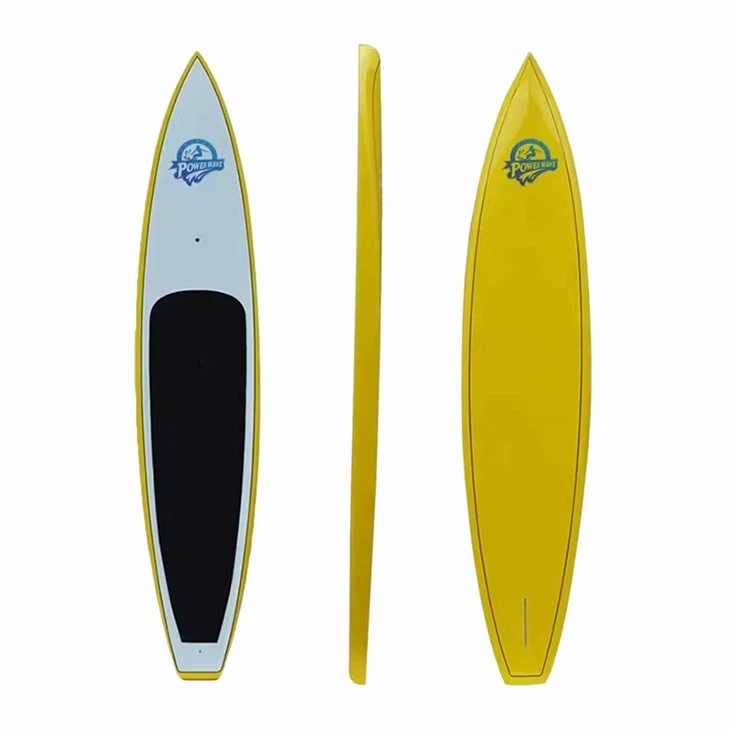

Long race boards are more specialized. They're designed primarily for long - distance racing on flat water or in ocean swells. While they can be used in other conditions, they may not perform as well as a short board.
Cost
The cost of race boards can vary depending on the materials and construction, but generally, long race boards tend to be more expensive. They require more materials to build, and the technology used to make them is often more advanced. Short race boards are usually more affordable, making them a great option for beginners or those on a budget.
Our Product Range
At our company, we offer a wide range of race boards to suit every need. Whether you're a beginner looking for a stable and affordable short board or an experienced racer in search of a high - performance long board, we've got you covered.
Check out our EPS Foam Carbon Fiber Race Boards. These boards are made with a lightweight EPS foam core and a carbon fiber exterior, providing a perfect balance of strength and weight. They're available in both short and long lengths, so you can choose the one that's right for you.
If you're looking for a pure carbon fiber race board, our Carbon Fiber Race Boards are the way to go. These boards are designed for maximum speed and performance, and they're built to last.
And for those who prefer stand - up paddle board racing, we have the Carbon Fiber Stand Up Paddle Board Race Board. This board combines the stability of a stand - up paddle board with the speed of a race board, making it a great choice for all types of races.
Conclusion
So, there you have it – the main differences between short and long race boards. Each type has its own unique advantages and disadvantages, and the right choice depends on your skill level, racing goals, and the conditions you'll be racing in.
If you're still not sure which board is right for you, don't hesitate to reach out to us. We're here to help you make an informed decision and find the perfect race board for your needs. Whether you're a seasoned pro or just starting out, we can provide you with the advice and support you need to take your racing to the next level. Contact us today to start the conversation about your ideal race board!
References
- Stand Up Paddle Board Racing: A Guide to Equipment and Training. Author unknown.
- The Physics of Paddleboarding. Journal of Water Sports Science. Volume 15, Issue 2.
