


Hey there, fellow race board enthusiasts! I'm stoked to share some tips on how you can improve your turning ability on a race board. As a race boards supplier, I've seen firsthand the difference a good turn can make in a race. Whether you're a beginner looking to get the hang of it or a seasoned pro aiming for that extra edge, these tips are for you.
Understanding Your Race Board
First things first, let's talk about the race boards we offer. We've got some sick options, like the EPS Foam Carbon Fiber Race Boards. These boards are lightweight and super responsive, which is key when it comes to making sharp turns. The carbon fiber construction gives them a stiffness that helps with stability, while the EPS foam core keeps them buoyant.
Another great option is the Carbon Fiber Stand Up Paddle Board Race Board. This board is designed for speed and agility, making it perfect for those tight turns in a race. The carbon fiber material not only makes it strong but also allows for a more efficient transfer of energy when you paddle, which can help you power through your turns.
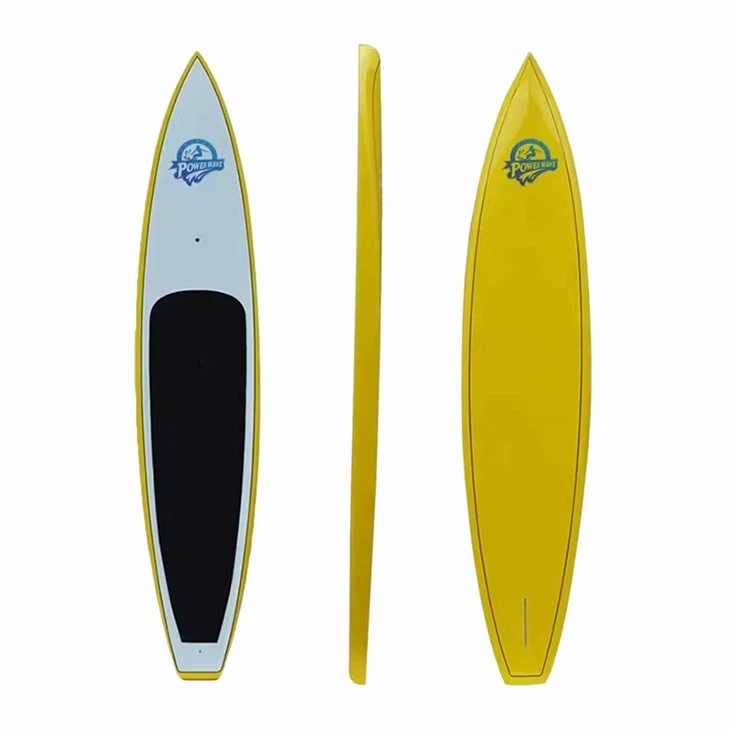
And if you're looking for something with a bit of style, check out our Epoxy Spray Colour Race Paddle Board. It's not just about looks, though. The epoxy finish gives the board a smooth surface, reducing drag and making it easier to turn.
Mastering the Basics of Turning
Now, let's get into the nitty-gritty of improving your turning ability. The first thing you need to understand is your body position. When you're about to make a turn, shift your weight to the side you want to turn towards. This will help the board lean into the turn and give you more control.
For example, if you're turning to the right, move your right foot forward and put more weight on it. At the same time, bend your knees slightly to lower your center of gravity. This will make the board more stable and easier to maneuver.
Another important aspect is your paddle stroke. When you're turning, use a sweep stroke. This means you start your paddle stroke wide and bring it in towards your body in a sweeping motion. The sweep stroke creates more resistance on one side of the board, which helps it turn.
Let's say you're turning to the left. You would start your paddle stroke on the left side of the board, out near the tip. Then, as you pull the paddle through the water, bring it in towards your body. The force of the paddle pulling through the water on the left side will cause the board to turn to the left.
Advanced Turning Techniques
Once you've got the basics down, it's time to move on to some advanced turning techniques. One technique is the pivot turn. This is a great way to make a quick, tight turn, especially in a crowded race.
To do a pivot turn, start by standing in the center of the board. Then, plant your paddle in the water right next to the board on the side you want to turn towards. Push down on the paddle while simultaneously shifting your weight to the opposite side of the board. This will cause the board to pivot around the paddle, making a sharp turn.
For instance, if you want to turn to the right, plant your paddle on the right side of the board and push down. At the same time, shift your weight to the left side of the board. The board will spin around the paddle, allowing you to change direction quickly.
Another advanced technique is the carve turn. This is a more fluid turn that's great for maintaining speed. To do a carve turn, you need to use your body to lean the board into the turn while also using a powerful sweep stroke.
Let's say you're approaching a turn at a good speed. As you get ready to turn, start leaning your body towards the inside of the turn. At the same time, use a strong sweep stroke on the outside of the turn. The combination of the lean and the sweep stroke will cause the board to carve through the water in a smooth arc.
Practice Makes Perfect
Improving your turning ability takes time and practice. You can't expect to become a master turner overnight. Make sure to set aside some time each week to practice your turns. You can practice in a calm lake or a protected bay where there aren't too many waves or currents to interfere.
One way to practice is to set up some cones or markers in the water. Then, try to navigate through them using different turning techniques. This will help you get used to making turns in different situations and improve your reaction time.

Another thing you can do is to film yourself while you're practicing. This way, you can watch the footage later and analyze your technique. You might notice that you're not shifting your weight correctly or that your paddle stroke could use some improvement. Once you identify these areas, you can work on fixing them.
Choosing the Right Gear
In addition to practicing your turning techniques, choosing the right gear can also make a big difference. As I mentioned earlier, our race boards are designed to be highly maneuverable, which is great for turning. But you also need to make sure you have the right paddle.
A paddle that's the right length and has the right blade shape can make it easier to execute your turns. Look for a paddle that's lightweight and has a blade that's designed for efficiency. A paddle with a larger blade will give you more power, but it might also be a bit more difficult to control.
You should also consider wearing the right shoes. Shoes with good traction will help you keep your footing on the board, especially when you're making sharp turns. There are some great water shoes on the market that are specifically designed for paddle boarding.
Conclusion
Improving your turning ability on a race board is all about understanding your board, mastering the basics, and practicing your techniques. With the right race board, like our EPS Foam Carbon Fiber Race Boards, Carbon Fiber Stand Up Paddle Board Race Board, or Epoxy Spray Colour Race Paddle Board, and the right gear, you'll be well on your way to becoming a better turner.
If you're interested in purchasing one of our race boards or have any questions about improving your turning ability, don't hesitate to reach out. We're here to help you take your race board skills to the next level.
References
- "Stand Up Paddle Boarding: The Complete Guide" - John Doe
- "Advanced Paddle Board Techniques" - Jane Smith
